
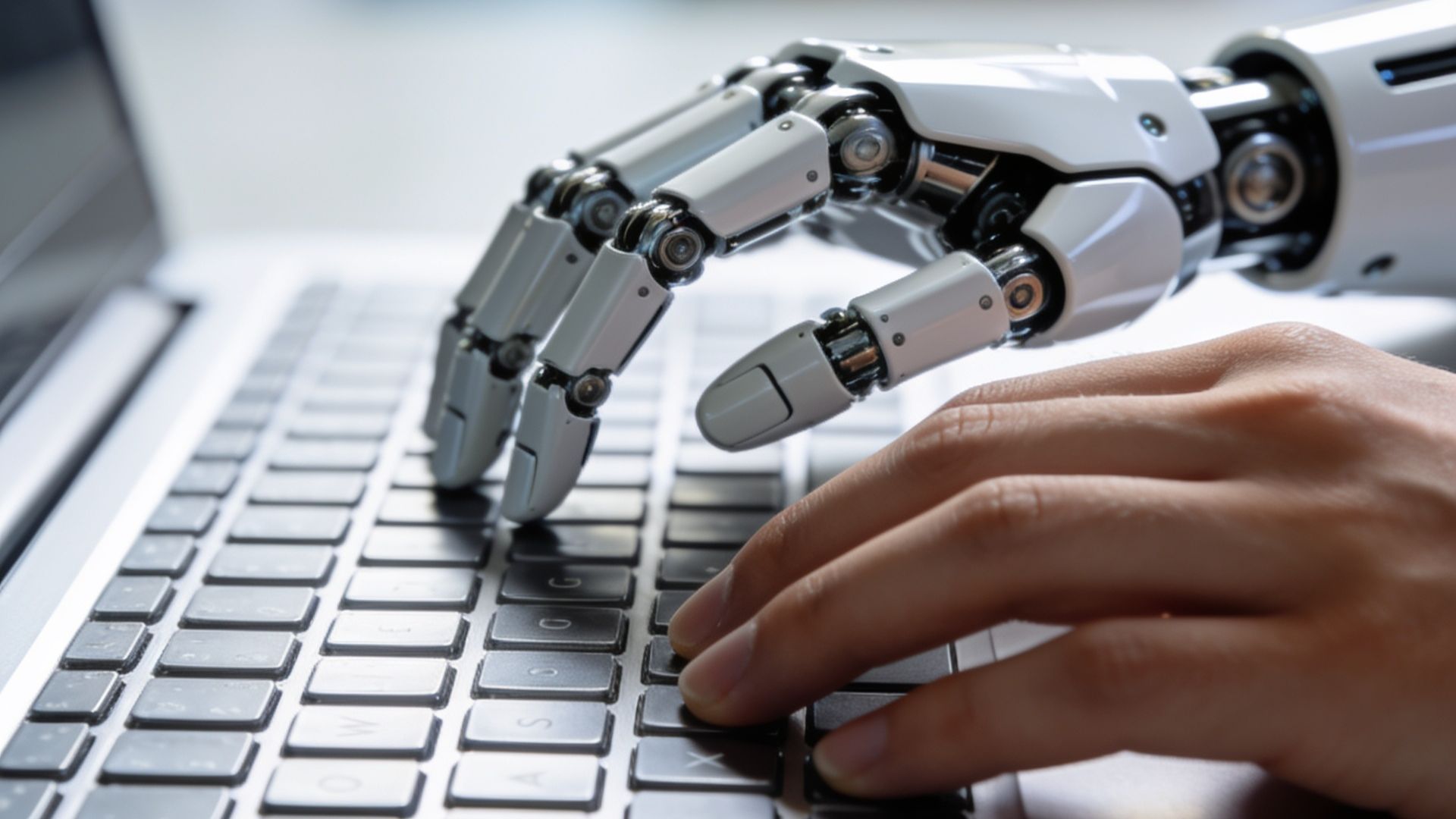
The human-to-machine analogy has been used for centuries, changing its direction based on the era.
Up to not so long ago, humans were compared to machines, specially to computers in terms of processors and operating systems. According to this analogy, the brain is the central processing unit, the mind and intellect are the operating system, memory and recall are the RAM and hard drive, the heart is the power supply and lungs are the fans, while experience and learning are the training data and algorithms that help calibrate the system as a whole.
In the current era of Artificial Intelligence, this analogy has been inverted. Now, computers are referred to as human beings. The machine operating system is being trained to resemble human mental processes such as learning, comprehension, problem solving, decision making, and so forth.
For some this attempt to simulate the human brain and mind is being successfully achieved, for others, the outcome is far from being achieved.
Human-to-machine
The human machine is much more than just the sum of its component parts. It is animated matter capable of adapting to environments and evolving over generations. Life behind this extraordinary machine is what powers its existence.
This machine does not only predict or simulate, but perceives, reasons and acts physically and intelligently within the real world. Direct engagement with the physical world allows it to learn from digital and non-digital data as well as from interactions and communication with other human machines in different contexts.
Although embodiment makes this machine seem less efficient and faulty, it is precisely the non-separation of body and mind that makes this machine unique in learning and responding to uncertain physical interactions in complex or dynamic settings. Embodiment is not peripheral to brain function but a part of its fundamental structure.
Taking this analogy to the field of translation, we can say that all components in the human machine work in a perfect synchronisation to process language and meaning. The human translator machine takes knowledge acquired by study or real-world human interaction and applies it to the translation job it has been assigned to.
Linguistic knowledge helps the human machine understand the original content in the source language and dictates how meaning will be expressed in the target language following the corresponding grammar rules (especially when these rules are context bound) to make the content sound natural and compelling to the intended human audience. Domain knowledge also contributes not only to understanding the text but to precisely capturing source information (meaning) into the target text.
In the context of medical translation, knowledge, embodiment and real-world experience need to be taken into account because most medical content is about the human body and its physical interaction with the world. Something that only humans, so far, know of.
Machine-to-human
Efforts are being made to provide contemporary Artificial Intelligence with a human-like body that can help in different industrial applications and fields such as manufacturing, healthcare, and logistics. Despite some progress in fictitious language production, vision and models that partially mimic the world (as perceived by just a few), the development of physical or embodied Artificial Intelligence that can sense, act and adapt effectively in a real-world context still remains an open challenge.
Disembodiment is a visible drawback of this technology because it limits the human-like machine to the data and information it is fed with. It has no independence whatsoever to get information or generate ideas by itself—although its developers claim it can learn by itself once you have provided the correct input. Cut off human input—we are all providing directly or indirectly, by the way—and the machine will no longer be able to “learn” by itself.
Despite this disadvantage, the human-like machine, or more specifically its deep neural networks developed from basic knowledge about the human brain, can process data faster than the human machine.
In the field of translation, fast machine output may be the solution for certain standard documents with repeated content where information does not need to be interpreted but just literally translated. But transferring information literally and automatically from one language to another is not translation. Translation is much more than just processing data. It implies taking apart the pieces of a text (words, structures, context and meaning) in a source language, extracting the key content or message (meaning again) and assembling it back into a coherent text in a different language that has different rules and conventions.
Replacement or synergy?
Replacement
AI translation engines (general-purpose and aggregators, advanced models, and even industry-specific engines) will satisfy the translation of standard, repeated content requiring no deep interpretation, but just the presentation of data, as it may be the case, in the field of pharmaceutical translation, of production reports—formal documents that detail and summarise key metrics measured during the manufacturing process.
Non-replacement
Medical translation requires body, heart and soul. There is no replacement for human translators, especially in the medical and pharma marketing fields. More complex texts such as patient-facing material or promotional literature (pure pharma marketing) for healthcare professionals will still have to be handled by human specialised translators if the main objective is to reach these two specific audiences with content that is clear, unambiguous, accessible and above all, content that sounds natural, professional and compelling in the target audience own language.
Synergy
We are living in a new era where human and non-human intelligences will have to coexist. For some standard translation tasks, there will be no difference between non-specialised human’s and machine’s output. However, for more complex translation tasks that require not only bilingualism but in-depth domain knowledge and the cognitive and emotional operations of the mind, humans will still (and always) be in loop.
If you need specialised human translation services from scratch or editing services to improve the quality of raw machine translation of your key scientific, regulatory, and promotional documents, Vital Translations is the language service provider you can trust.
Visit our website at www.vitaltranslations.com and request a free quote.