
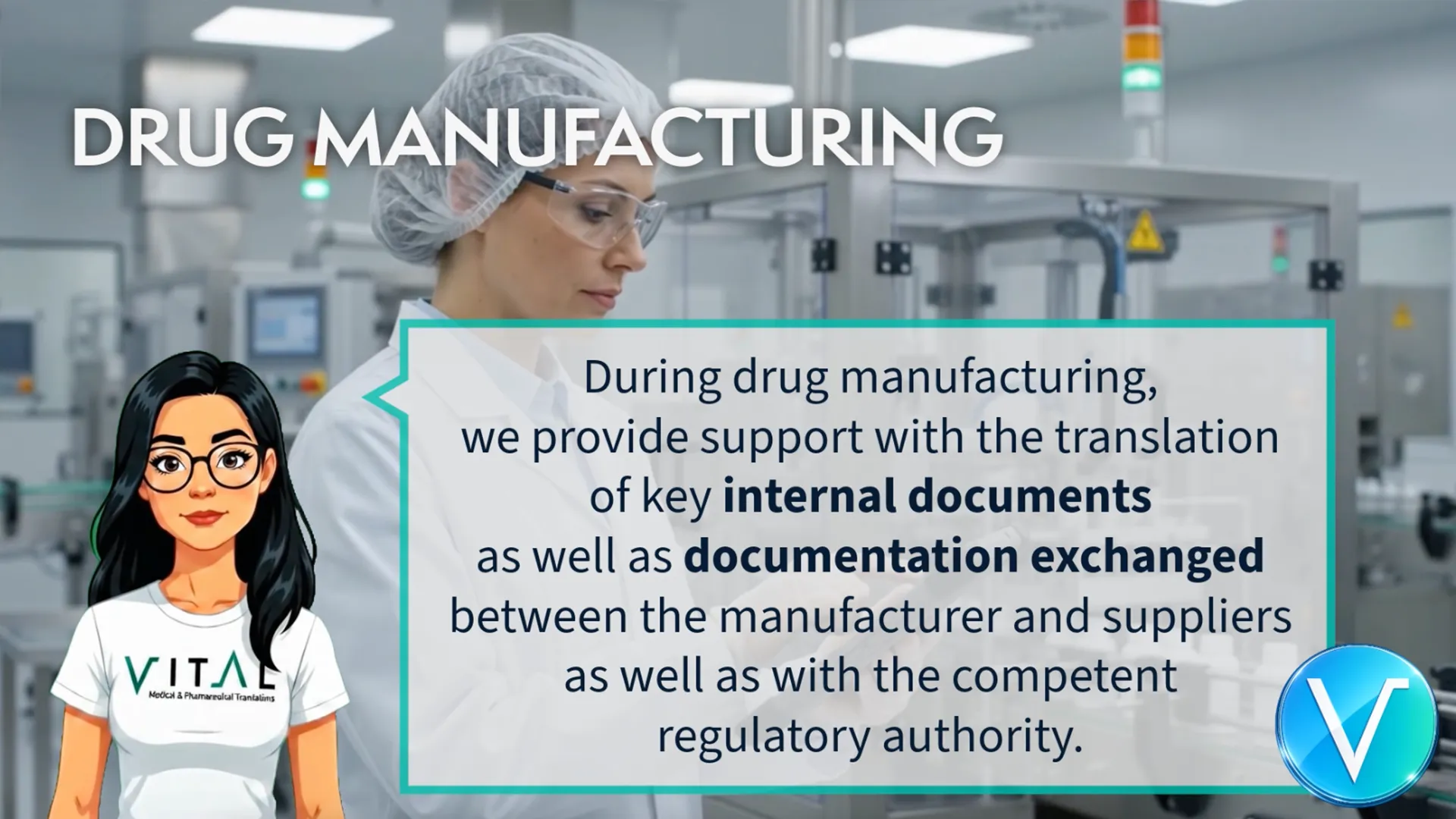
Compliance with GMP guidelines is essential to ensure that pharmaceutical products are consistently produced and controlled according to the required quality standards in each manufacturing facility during drug production.
We facilitate communication among key players of the drug manufacturing ecosystem by providing quality and timely translations of SOPs, specifications, policies, records, logbooks, CoAs, validation protocols, reports, and so forth.
Specialised Linguistic Solutions
Click on the links below to learn more about how our specialised linguistic services can help in each sector of pharma and biotech industries.
No. Although both translation and interpretation are language services that require the linguists in charge to be proficient in both the source language and the target language, have translation skills as well as subject matter knowledge on the topic they are working with and be accurate in conveying the tone and intent of the original message, these services serve different purposes. The translation service implies working with written text. Translators work with different types of documents to be printed, published online or even exchanged with other people. The interpretation service implies working with speech; that is, spoken text. Interpreters can work in situ, for example, in meetings, congresses, seminars, over the phone or via videocall. Whether you need a translation service or an interpretation service, always trust certified professional linguists.
No. The translation of regulatory documentation requires in-depth knowledge of the source and target regulatory affairs as well as of the terminology of mandatory use in the pharmaceutical industry to provide high-quality and timely translations and help avoid delays during drug authorisation and registration processes. The translation of advertising materials requires subject matter knowledge plus a touch of creativity, a combination of translation and copywriting skills to transfer the creative language —generally lost during a direct translation— into the target language to achieve the desired response from the target audience.
Yes. The desktop publishing (DTP) service can be provided as an integrated part of the translation process or as an independent service. In the first case, the client sends us the file for translation, and we then deliver a translated file that keeps the integrity of the original design. In the second case, the client sends the linguistic content and the specifications for page layout and a team of experts in the field of desktop publishing generates page layouts and produces printed or digital materials using DTP software. In both cases, we can advise the client on professional output aligned with the target language’s visual layout and design requirements.
Yes. The method for establishing translation rates is based on source word count, language pair, complexity of the document, project volume and urgency of delivery. When clients contact us to get a quote, we analyse the file(s) to determine total word count and the complexity of the file(s) and we also take into account the language pair; for example, if it is English into Spanish, or Spanish into English. Special discount rates may apply in big-volume projects and extra “rush charges” may apply in the case of urgent deliveries.
Yes. To be able to provide a quote, we first need to analyse the file(s) to determine the word count, the complexity and the translation steps that would be involved in the whole translation process; that is, we need to evaluate whether there is non-editable text that needs to be converted into editable text to be translated, determine the total word count to estimate the translation time and delivery date, and assess whether the file(s) require desktop publishing (DTP). To be able to provide an accurate quote, we need to see and analyse the file(s).