
BLOG Vital

Translation and Interpretation: Same language service?

Outside the translation industry, it is very common that expressions like “translation services” and “interpretation services” be misunderstood and considered two ways of referring to the same language service. Although this association is not completely wrong, these two language services have different approaches and serve distinct purposes.

The misunderstanding may stem from the fact that “translation” is generally described as the process of conveying the meaning of written or spoken discourse from one language into another language. And to some extent this description is true for both services.

Both translation and interpretation imply converting text from one language to another. Both require the linguists in charge to be proficient in the source and target languages, the linguists need to have formal translation skills as well as subject matter knowledge of the topic they are working with and they have to be accurate in conveying the tone and intent of the original message to facilitate communication and help people in different sectors overcome language barriers.

What is the difference then?

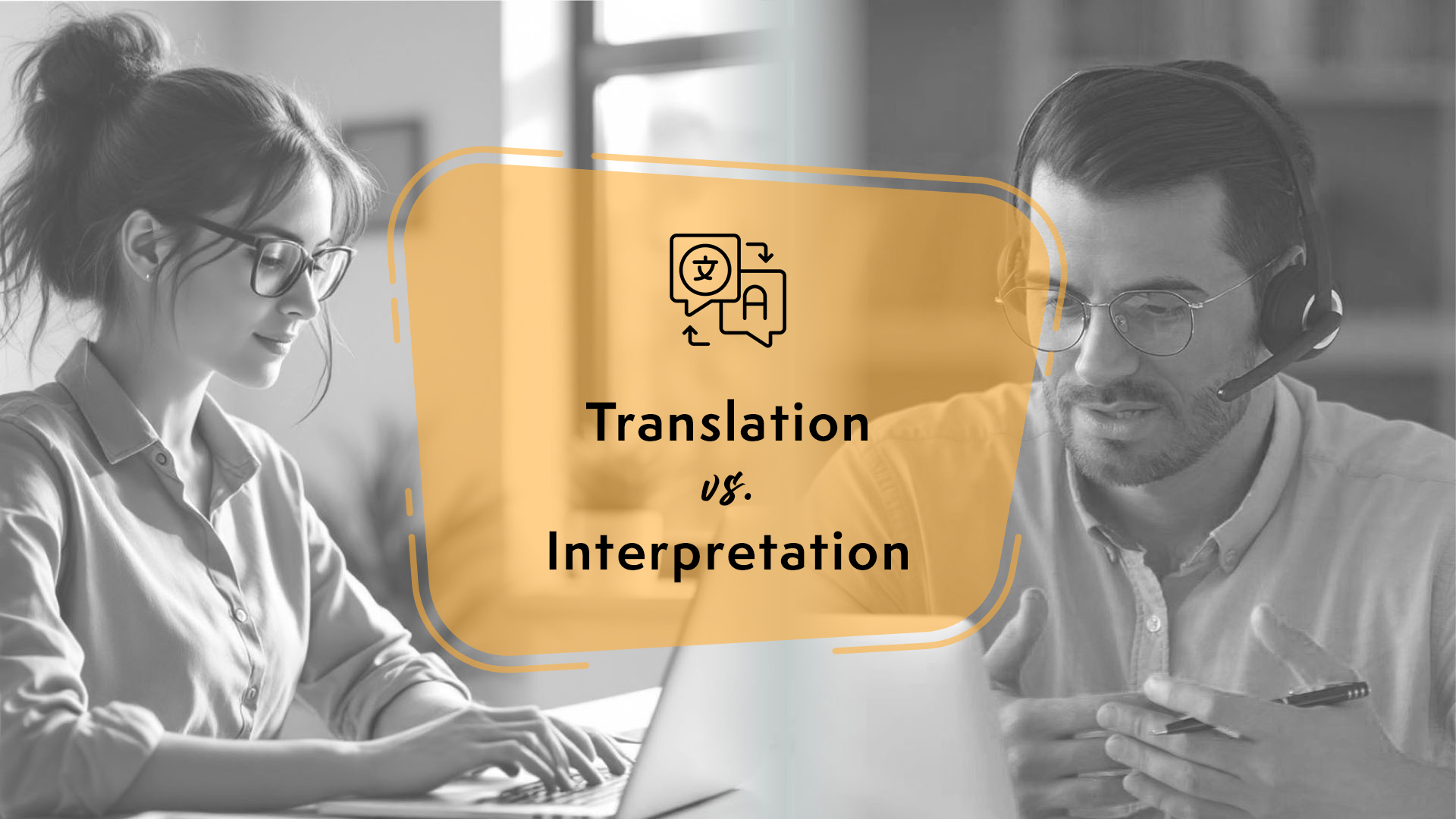
The main difference between these two language services is the type of text that is converted from one language to the other. The translation service implies working with written text, whereas the interpretation service implies working with spoken text.

Interpretation Service

The linguist in charge of this type of language service is called an interpreter.

Interpreters convert spoken text from one language to the other in real time. They deliver simultaneous or consecutive translations of what they listen from a speaker in one language into another language for audiences in live settings; for example, meetings, congresses, seminars, or from home over the phone or via video call.

Interpreters are time-bound and rely on a mix of cognitive abilities such as active listening, working memory, note taking, language deconstruction and reconstruction, stress management, among other cognitive processes.

Interpreters generally charge per hour.

TRANSLATION SERVICE

The linguist in charge of this type of language service is called a translator.

Translators convey written discourse from one language to another. They work with different types of documents for print or digital publications.

Besides being proficient in both source and target language systematic rules, including syntax and semantics, orthography and punctuation, translators need a broad mix of writing skills, cultural competence, research skills, attention to detail, analytical thinking, and technical proficiency.

Translators can virtually work from anywhere as long as they have a computer and access to the Internet.

Translators work on predetermined deadlines. They have an assignment date and a delivery date for the translation, and time in between to deeply research on the topic they are translating about, and so there’s more precision in their translated output.

Translators can charge per word or per hour of work.

Vital Translations is the language service provider you can trust with the translation of your key documents.

We offer specialised medical, pharmaceutical, and legal translation services in the fields of medicine, clinical research, and the pharmaceutical industry.

From the lab to the patients, we accompany pharma and biotech research companies in their extraordinary endeavours of drug discovery, development, registration, manufacturing, marketing and promotion with precise and timely translations.

¿Es lo mismo traducción que interpretación?

No. Aunque la traducción y la interpretación son servicios lingüísticos que requieren por parte del profesional a cargo conocimiento de dos o más pares de idiomas, habilidades formales de traducción y conocimiento de campo para transmitir el mensaje original de forma precisa, respetando el tono y el propósito del contenido, no son los mismos servicios. El servicio de traducción implica trabajar con textos escritos. Los traductores trabajan con diferentes tipos de documentos (en formato papel o digital) de manera asincrónica. Se les asigna el proyecto con un periodo de tiempo establecido en el cual debe entregar el trabajo final. El servicio de interpretación implica trabajar con texto oral en tiempo real de forma simultánea o consecutiva. Los intérpretes pueden trabajar en el mismo lugar donde está su cliente; por ejemplo, conferencias, seminarios, reuniones, o mediante llamadas telefónicas o videollamadas.

No. Vital Translations es un proveedor de servicios lingüísticos que se especializa en servicios de traducción; es decir, ofrecemos traducciones de textos escritos (del inglés al español y viceversa). Nuestros servicios de traducción especializada abarcan la traducción de documentos médicos, farmacéuticos, legales; transcripción de audios y subtitulado de videos; traducción de material publicitario para profesionales sanitarios o educativos para pacientes, además de servicios de revisión humana de traducciones automáticas hechas con motores de IA y servicios de maquetación (diseño gráfico final del documento traducido).

Vital Translations ofrece servicios de traducción en la combinación de idiomas inglés-español/español-inglés. Trabajar solo con estos dos pares de idiomas es un componente clave de nuestra especialización. Nuestra misión es ayudar a las empresas farmacéuticas y biotecnológicas a ingresar a los mercados de habla inglesa o hispanohablantes con traducciones especializadas adaptadas a cada variante del inglés o el español.

No. La traducción de documentación regulatoria requiere un conocimiento profundo del marco legal y regulatorio tanto del idioma de origen como del idioma de llegada, además de conocimiento sobre la terminología de uso obligatorio en cada uno de esos contextos regulatorios. La traducción de material publicitario en las industrias farmacéutica y biotecnológica requiere conocimiento de campo además de una combinación de habilidades de traducción y redacción publicitaria para transmitir el contenido original cuidadosamente estructurado por el equipo de marketing en una traducción que transmita el mismo mensaje, pero teniendo en cuenta a la audiencia de llegada.

Sí. El método más frecuente para establecer las tarifas de traducción se basa en la cantidad de palabras del documento original, el par de idiomas, la complejidad del documento, el volumen del proyecto y la urgencia de entrega. El primer paso para establecer el precio de la traducción es conocer la cantidad de palabras que hay en todo el documento. Luego, se evalúa la complejidad, el par de idiomas y demás criterios. Contamos con una tarifa estándar para proyectos que no implican gran complejidad de procesamiento, descuentos para clientes frecuentes y descuentos especiales a partir de las 50.000 palabras. Para trabajos urgentes (en el día, en 24-48 horas o durante el fin de semana), pueden aplicarse cargos adicionales.

Sí. Para poder presupuestar el servicio requerido, debemos analizar los documentos para determinar la cantidad total de palabras, la complejidad, el tiempo que tomará procesarlos, los pasos que deberán implementarse; por ejemplo, si será necesario convertir el texto no editable (documentos escaneados) en texto editable para su posterior traducción o si será necesario el servicio de maquetación del documento traducido, además de tener en cuenta las especificaciones del cliente.